

Advice
Questions to ask before buying a fire or stove
Use this practical checklist to compare appliances, installation routes, running requirements and the finished fireplace before you commit.
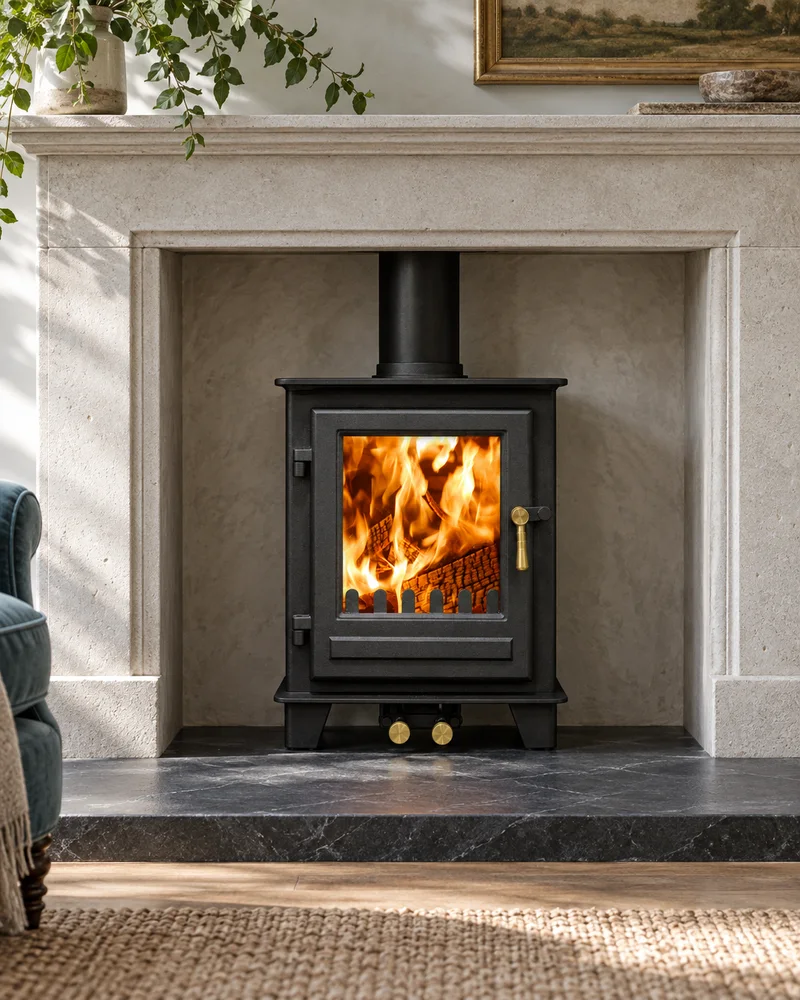
A good buying conversation should cover the room, appliance and installation as one project. A fire can look perfect in isolation and still be a poor fit for the heat required, the available chimney or flue, the surrounding materials or the way you want to use it.
Use the questions below as a checklist. You do not need every answer before visiting a showroom. The aim is to expose the decisions that need evidence before an order or installation is agreed.
Questions about the room
What do I want the fire to do?
Decide whether the priority is regular room heat, an occasional flame, a fireplace focal point, a media-wall feature or a mixture of these. That answer influences fuel type, output and format.
What space is the appliance expected to heat?
Record the room dimensions and include open doorways, vaulted ceilings and adjoining open-plan areas. Note insulation, large windows, draughts and existing heating. A room-volume estimate is a starting point rather than a complete heat-loss assessment.
What will surround the appliance?
Ask how the stove or fire relates to the hearth, chamber, mantel, wall finish, television, furniture and circulation through the room. The required construction and clearances depend on the exact model and installation.
Questions about fuel and everyday use
Which fuel suits the routine I actually want?
Wood and multi-fuel appliances involve buying and storing suitable fuel, lighting, refuelling and ash. Gas offers a real flame with direct controls, subject to the gas and flue arrangement. Electric provides flame effects and broad placement options, subject to the appliance and electrical requirements.
Compare wood-burning, multi-fuel, gas and electric before narrowing the models.
What fuel is the exact appliance approved to use?
Never infer this from a category name. Check the manufacturer instructions. A multi-fuel stove does not permit household rubbish, treated wood or every solid fuel, and local smoke-control rules may further restrict the appliance-and-fuel combination.
What will operation and maintenance involve?
Ask how to light, control, refuel and shut down the exact appliance, and what routine cleaning it requires. Also ask how the chimney or flue is swept, how the appliance is serviced and which parts are expected to wear. Keep the manufacturer instructions after handover.
Questions about the appliance
Is the output suitable for this room?
Compare nominal output and operating range with a realistic view of the room’s heat demand. Avoid adding power simply as a safety margin. Read the stove-output guide and bring room dimensions and photographs for a more useful discussion.
Can I see the flame, finish and controls in person?
Images are useful for style, but scale and flame picture are easier to judge in a showroom. Ask whether the particular model is currently available to view or lit before travelling specifically for it; display ranges change.
What is included with the appliance?
Clarify which controls, trims, fuel-bed options, log stores, pedestals or other components are standard and which are separate. For electric and gas fires, confirm the chosen format and finish against the exact model reference.
Which documents and warranty conditions apply?
Ask for the manufacturer instructions, product data and warranty terms. Check whether the warranty depends on registration, approved fuel, servicing or an installation record. Do not rely on a verbal summary where the written conditions are available.
Questions about the chimney, flue and services
Is there a suitable existing chimney?
An existing chimney still needs assessment. Its route, condition, dimensions and intended appliance all matter. A chimney liner is not selected from the age of the house alone, and a missing chimney does not automatically rule out every stove: a purpose-designed flue route may be possible.
What flue arrangement does this gas appliance require?
Gas fires and stoves use different flue arrangements. Confirm the exact appliance type, proposed position, gas supply and route. UK gas work must be carried out by a Gas Safe registered business or engineer qualified for that category of work.
What electrical supply is required?
For an electric fire, ask whether it uses a normal plug and socket or needs other electrical work. Built-in fires and media walls need the power position, cable access, ventilation and surrounding construction planned together. Use a registered electrician where installation work is required.
Does the project need extra ventilation or a carbon-monoxide alarm?
Combustion appliances must be planned with their air supply and safe discharge of combustion products. Requirements vary with appliance, property and installation. Approved Document J and the manufacturer instructions form part of that assessment; a general showroom comparison cannot replace it.
Questions about installation and handover
Who is responsible for each part of the work?
Ask who will assess the property, prepare the fireplace, install the appliance and flue, complete gas or electrical work where needed, dispose of waste and make good the surrounding finishes. Written scope prevents assumptions between trades.
How will compliance be handled?
Ask which competent-person registration or Building Control route applies, what checks will be carried out and what records you should receive. HETAS advises that solid-fuel installations in England and Wales must be notified through a competent-person scheme or directly to local authority Building Control. Gas work must be completed by a suitably registered Gas Safe engineer.
What will be demonstrated at handover?
The handover should make the appliance easier to use correctly. Ask for the operating instructions, approved fuels, control sequence, alarm information, sweeping and servicing needs, warranty steps and what to do if the appliance or flue does not behave as expected.
What still depends on a survey?
Separate showroom guidance from facts that can only be confirmed at the property. The final flue route, chimney condition, clearances, ventilation and building work may all need a site assessment.
Questions about the quote
Before accepting a quotation, make sure it identifies:
- the exact appliance and selected finish;
- key optional parts or accessories;
- the stated installation and building work;
- chimney, liner or flue components where applicable;
- hearth, chamber, surround or making-good work;
- electrical or gas work included;
- known exclusions and decisions still subject to survey;
- payment stages, expected timing and warranty information.
Do not judge competing quotes by the appliance price alone if the scopes are different. The finished, compliant installation is the useful comparison.
A short checklist to take with you
- What am I trying to achieve in the room?
- Which fuel routine suits us?
- What output range is being considered, and why?
- What does the exact appliance require around it?
- What chimney, flue, gas or electrical work may be needed?
- Which points require a survey?
- Who completes and records each part of the installation?
- What is included in the written quote?
- What operation, fuel, sweeping and servicing guidance will I receive?
- Can I see the model or a close alternative before deciding?
Take the checklist to the Macclesfield showroom, or use the photo survey to share the room before a detailed conversation.
Sources checked
General guidance checked on 16 September 2026 against:
- HETAS: before-you-purchase consumer guidance
- HETAS: registered installers and compliance information
- Planning Portal: Approved Document J overview
- GOV.UK: registration to carry out gas work
- GOV.UK: smoke control area rules
- Electrical Safety First: home electrical safety advice
This is a buying checklist rather than a design or installation specification. The property assessment and manufacturer instructions determine the final requirements.
Continue planning
Related buyer guides
Preparing for a stove and fire showroom visit
Bring the photographs, measurements and property details that turn a showroom visit into a useful shortlist for your home.
02Wood-burning, multi-fuel, gas or electric: how to choose
Compare the flame, control, fuel, room and installation questions that separate wood-burning, multi-fuel, gas and electric fires.
03How to choose the right stove output for a room
Understand nominal stove output, room heat demand and the property details that matter before choosing a kW rating.
A simple first step
Ask about your room
Tell us what you have in mind. The showroom team will be in touch shortly.
Prefer to talk? Call 01625 402900.