

Advice
Preparing for a stove and fire showroom visit
Bring the photographs, measurements and property details that turn a showroom visit into a useful shortlist for your home.
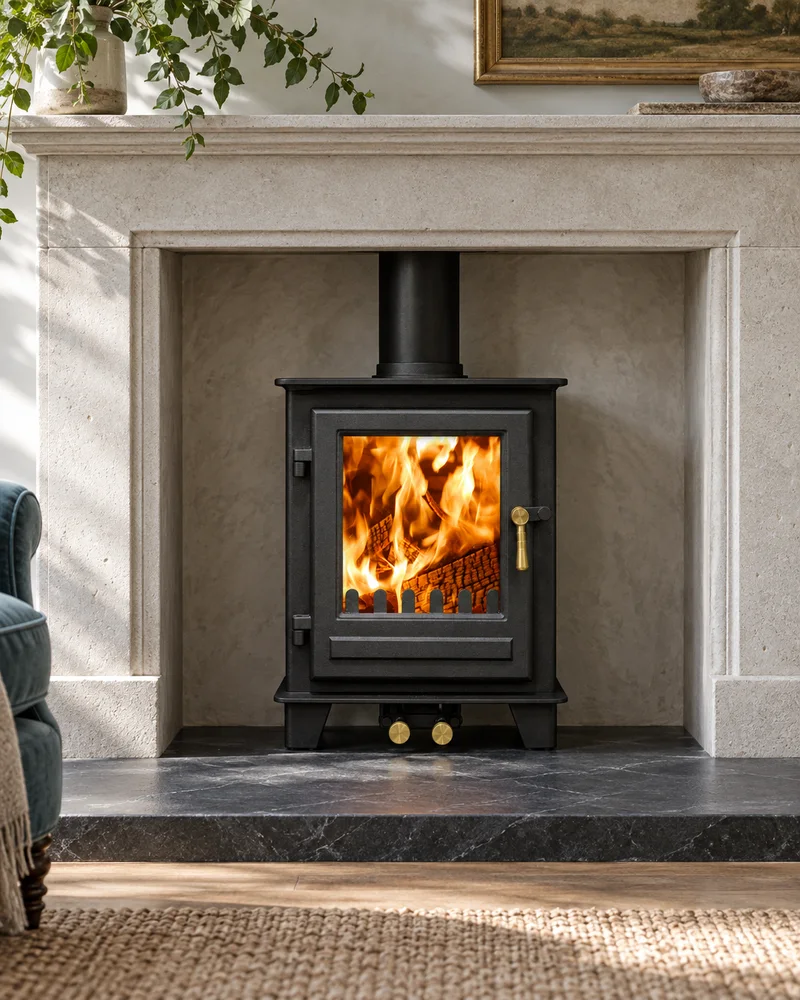
You do not need a finished plan before visiting a stove and fire showroom. A few useful photographs, rough measurements and notes about how the room is used can make the conversation much more specific. They help connect the appliances on display to the property you actually have.
The information below is helpful rather than a condition of visiting. If you are at the beginning, come with questions. If the project is further along, bring the details you already know and leave the uncertain parts clearly marked.
Photograph the whole room
Start wider than the fireplace. Stand in each corner and photograph the room so the layout, doors, windows, furniture and adjoining spaces are visible. Then add closer photographs of the intended position.
Useful views include:
- the complete fireplace or chimney breast, floor to ceiling;
- the opening, hearth and mantel or surround;
- the wall if there is no existing fireplace;
- nearby doors, windows, television and fixed furniture;
- open-plan connections to kitchens, halls or other rooms;
- the outside wall, chimney stack or roof area when safely visible from ground level;
- an existing appliance, controls and any readable model label.
Do not climb onto a roof or open an appliance to take photographs. The goal is context, not a remote technical inspection.
Take rough measurements
Exact survey dimensions can come later. For a first showroom discussion, record:
- room length, width and ceiling height;
- fireplace-opening width, height and depth;
- chimney-breast or proposed feature-wall width;
- hearth width and depth;
- distance to nearby furniture, television or door openings;
- media-wall width and desired screen position, if relevant.
Label the measurements on a simple sketch or annotate a photograph. Include the units. A rough dimension marked “approximately 1.2 m” is more useful than an unlabelled number.
Note what is already present
Write down what you know about the property without guessing:
- Is there an existing chimney, flue or fireplace?
- Is an appliance currently installed?
- Is there a gas supply near the proposed position?
- Where are the electrical sockets or fused connections?
- Has the room been extended or opened into another space?
- Have insulation or windows been upgraded?
- Is the property listed or subject to other known restrictions?
- Do you know whether the address is in a smoke control area?
“Unknown” is a useful answer. It shows which facts need checking during the next stage.
Think about the way you will use the fire
The showroom team can make a better comparison when they understand your routine. Consider:
- whether the fire is for regular heat, occasional evenings or mainly visual impact;
- which room or connected space you expect it to warm;
- how often you expect to use it;
- whether you want to light and tend a solid-fuel fire;
- whether you have dry storage for logs or other permitted fuel;
- how much control and automation matters;
- who will use the appliance and whether simple controls are a priority.
If the fuel type is still open, that is fine. Read the fuel comparison guide and bring the two most realistic options rather than forcing an early decision.
Bring style references with a reason
Screenshots, saved products and room images help communicate taste. Add a short note about what you like in each one: the wide flame, tall stove body, pale stone, minimal trim, traditional door or simple controls.
Also note what you dislike. “Too ornate”, “too small for the wall” or “I do not want a television above it” can be as useful as a favourite model.
Try not to make the visit depend on one image. Camera angles, room scale and finishes can look different in person, and the model may not suit the property. Use inspiration to set the direction, then compare proportions and practical requirements in the showroom.
Prepare questions for the exact models
For each serious option, ask:
- What is the nominal output and useful operating range?
- Which fuels or power supply does this model require?
- What chimney or flue arrangement is needed?
- What hearth, chamber, wall construction and clearances apply?
- Which controls, finishes and accessories are standard?
- What cleaning, sweeping and servicing will it need?
- Can this model be viewed or demonstrated before a decision?
- Which parts of suitability still need a property survey?
The questions-before-buying guide expands this into a full checklist.
Budget and timing
If you are comfortable giving a working budget, say whether it covers the appliance only or the complete finished project. A stove or fire may also involve a flue or liner, hearth, chamber, surround, gas or electrical work and making good. A clear scope is more useful than comparing appliance prices in isolation.
Mention any real timing constraint, such as planned building work or a room renovation. Treat an early timeline as a planning input rather than an agreed installation date; the exact product, survey and scope come first.
What the first visit can achieve
A useful first visit should help you:
- understand which fuel types are realistic;
- compare scale, flame picture, finish and controls;
- narrow the choice to a small number of appliances or formats;
- identify the property facts still missing;
- understand whether photographs are enough for the next conversation or a survey is needed;
- leave with clear next actions rather than a rushed purchase.
The visit cannot confirm hidden chimney condition, final flue design or every installation detail from photographs alone. Those points belong to the property assessment and the exact appliance instructions.
If you cannot collect everything first
Come anyway if the showroom visit will help you understand the choices. Start with the property address, a phone photograph and a description of the room. You can send more structured information later through the photo-survey page.
Before travelling specifically for a model or working display, contact the showroom to check current availability. You can plan your Macclesfield showroom visit for address, opening hours, parking and directions, or enquire about visiting.
Your one-page visit pack
Save this short list:
- 4 to 8 photographs showing the whole room and intended position;
- room length, width and height;
- fireplace or feature-wall measurements;
- notes on chimney, gas and electrical points;
- the main job you want the fire to do;
- two or three saved styles or models;
- your priority questions;
- working budget scope and any genuine timing constraint.
That is enough to turn a general browse into a focused first shortlist.
Sources checked
General preparation guidance checked on 16 September 2026 against:
- HETAS: before-you-purchase consumer guidance
- HETAS: registered installers and property-specific guidance
- Planning Portal: Approved Document J overview
This guide prepares a first conversation. It does not replace a site survey, heat-loss assessment or the installation instructions for the selected appliance.
Continue planning
Related buyer guides
Questions to ask before buying a fire or stove
Use this practical checklist to compare appliances, installation routes, running requirements and the finished fireplace before you commit.
02Wood-burning, multi-fuel, gas or electric: how to choose
Compare the flame, control, fuel, room and installation questions that separate wood-burning, multi-fuel, gas and electric fires.
03How to choose the right stove output for a room
Understand nominal stove output, room heat demand and the property details that matter before choosing a kW rating.
A simple first step
Ask about your room
Tell us what you have in mind. The showroom team will be in touch shortly.
Prefer to talk? Call 01625 402900.